THE LROS APPROACH
How we shine
A Steady Rhythm With Room For Childhood.
The LROS day is built around meaningful play, real connection, clear boundaries, creativity, movement, rest, and a home-like environment where littles can feel secure enough to explore.
Care is structured without being rigid, playful without being chaotic, and responsive to the children who are actually here - not an imaginary group of perfectly synchronized toddlers from a brochure.
Structure with softness
Young children feel more secure when the day has a familiar shape. They also need flexibility when they are tired, deeply invested in a block tower, adjusting to something new, or simply moving through the world at toddler speed.
LROS uses a predictable flow rather than a minute-by-minute schedule. Littles learn what generally comes next while still having room for curiosity, individual needs, and the magic that rarely arrives on command.

Play is how littles learn
-
Familiar routines and manageable choices help littles feel capable, secure, and increasingly independent.
-
Art, music, stories, sensory play, dramatic play, building, and open-ended materials give children room to imagine and express themselves.
-
Daily routines offer opportunities to choose, try, help, clean up. communicate, and practice doing more for themselves.
-
Littles practice sharing space, waiting, taking turns, using words, solving small problems, noticing others, and learning that friendship sometimes involves not licking someone else’s snack.
-
Big feelings are met with calm guidance, clear limits, and support returning to the group when a child i s ready.
Learning is woven into conversation, movement, books, music, pretend play, sensory experiments, problem solving, routines, and everyday choices. We do not need to recreate school downstairs for young children to build real skills.
Participation Is Encouraged—Never Forced
Some littles jump into a new activity immediately. Some need to watch. Some want to participate in a completely different way than the one I imagined while setting it up. All of those responses provide useful information.
I encourage children to explore without requiring them to complete an activity, create a specific product, or participate before they feel ready. The invitation remains available, and connection comes before compliance.

Guidance Through Hard Moments
Young children are still learning how to manage frustration, communicate their needs, wait, share space, and recover when life commits the unforgivable crime of handing them the wrong cup.
Redirection is used first. When needed, a child may be moved away from the situation or given a brief, supported pause to calm down and reset. Boundaries remain clear, but children are not shamed for having feelings or needing help using safer behavior.
Full behavior-guidance policies are shared during enrollment and included in the Parent Handbook.
A Typical Day
-
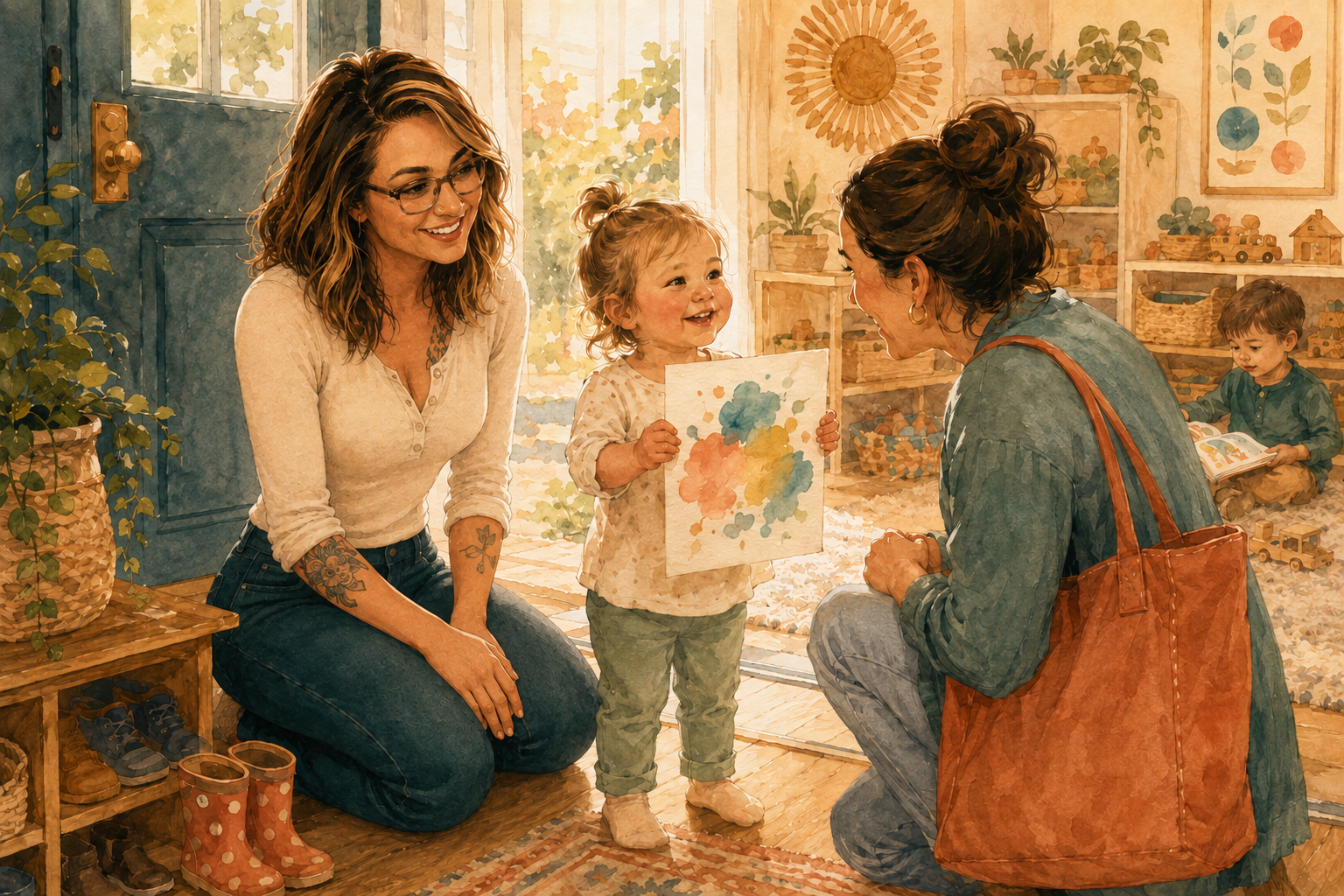
Littles arrive, settle in, reconnect, and begin with familiar open-ended choices.
-
Music, books, movement, conversation, and short group moments help us ease into the day together.
-
Guided activities, sensory invitations, dramatic play, building, art, and everyday learning moments support curiosity and development.
-
Weather permitting, littles head outside before lunch for fresh air, big movement, exploration, and the important scientific work of fining sticks.
-
We eat lunch together while practicing independence, coversation, routines, and age-appropriate table skills.
-
After lunch, the playcare shifts into a calmer part of the day for sleep, rest, or quiet activities based on age and individual needs.
-
The afternoon includes creative choices, sensory play, music, books, pretend play, one provided snack, and opportunities to recconect after rest.
-
The day winds down with relaxed play and a smooth transition home. Families receive a clear pickup run down and any important updates.

What Is Included
-
![]()
Lunch and one snack per day.
-
![]()
Routine art and sensory materials.
-
![]()
Books, music, imagination, dramatic play, and hands-on discovery.
-
![]()
Indoor and outdoor movement opportunities.